Branches
The permanent exhibition located in the building of the former warehouse No. 1 (Hall A of the Museum of Transport, Bratislava) introduces visitors to the development of road and rail transport in Slovakia since the second half of the 19th century. The exhibition presents a variety of different types of motorized and non-motorized means of transport used in the past to transport people and cargo, from the simplest ones, which include historical velocipedes, bicycles or baby carriages, through motorcycles and tricycles, to cars mainly from the interwar period.
The history of one of the oldest and most popular means of transport – the bicycle, which is still gaining its fans today, is presented by the oldest types of velocipedes with a large wheel from the late 19th century, as well as one of the first bicycles with a cross frame and rear wheel drive from the German brand Brennabor from 1888. These are followed by a wide range of more modern types produced during the 20th century, including Czechoslovak products from the brands Stadion, Velamos, Liberta, Favorit and Eska, including the popular "skladacka".
The exhibition of horse-drawn vehicles is very interesting, in which you can find a classic carriage for transporting people, a team sleigh from the late 19th century used to transport people in the winter, but also, for example, a historic hearse. This part of the exhibition is currently dominated by a collection of historical firefighting equipment from the late 19th and first half of the 20th century, used in the past to fight fires in the village of Vrakuňa, which is now part of Bratislava.
In 2018, a cabinet of curiosities was added to the exhibition in Hall A.
More than twenty historical motorcycles show visitors the development of this type of vehicle. There are foreign-made motorcycles from the interwar period, the oldest of which (the French Terrot or the American Indian Chief) come from the 1920s. Among the exhibits from the post-war period, visitors can find mainly popular Czechoslovak motorcycles, mopeds and scooters of the ČZ, Jawa, Babetta and Tatran brands. Another interesting feature is the Indian racing lead motorcycle from 1932, exhibited with a specially modified Favorit bicycle, which was used in cyclist races behind motorcyclists on a banked track.
The exhibition also does not forget about vehicles intended for the transport of severely disabled people, including the Meyra tricycle, patented as an aid for war veterans, or the well-known "hadraplán" - the Czechoslovak Velorex motor tricycle with a leatherette body.
The historic cars exhibited in this exhibition come mainly from the interwar period. In addition to typical representatives of this period, which include the Tatra 57, Škoda Popular or Praga Picollo, you can also find unique items, such as the American Buick from 1913 or the Škoda 860, with which the Mladá Boleslav car manufacturer tried to compete with manufacturers of luxury limousines. A rare exhibit is one of the largest and most expensive interwar cars of Czechoslovak production, the six-cylinder Praga Golden from 1937, which is in a pre-renovation state and is part of a diorama of a period car workshop equipped with period tools.
A unique atmosphere is added to this exhibition by a number of smaller objects reminiscent of the history of road transport in our territory, which, in addition to various components of historical cars and motorcycles, include period advertising posters and signs, canisters and other containers for storing engine operating fluids, or historical fuel dispensers from petrol pumps.
The exhibition, located in the premises of the former warehouse No. 2 (Hall B of the Museum of Transport, Bratislava), presents the massive development of motoring in the territory of the former Czechoslovakia in the period after World War II. The composition of the passenger car fleet on our roads is illustrated by a collection of post-war Škoda cars, which represents an almost complete development series including the Škoda 1101 Tudor and the Škoda Octavia, followed by a series of popular "embéčky" with an engine in the back (Škoda 1000 MB De Luxe, Škoda 100, Škoda 105 L, Škoda 125 L) and ending with the Škoda Favorit from 1988, which is one of the first cars of this type produced.
Foreign cars from the so-called The collection of two-stroke engine vehicles from the former German Democratic Republic (Trabant 601 and Wartburg 353 in sedan and station wagon versions) is part of the car service diorama, which also presents period instrumentation for vehicle diagnostics. The exhibition also includes the very popular Lada 1200 based on the Italian Fiat 124, as well as the unique small Fiat 126 BIS in a lesser-known version with a water-cooled engine. Cars from Western Europe are represented by, for example, the now-defunct Simca 1300. However, visitors to this exhibition will be particularly interested in the unique prototypes of passenger cars and commercial vehicles that were designed and manufactured by motor vehicle development workers in Bratislava. The greatest jewel of the prototype collection is the Tatra 603 MB microbus, built in the Bratislava branch of the Tatra company in 1961 with the engine of a famous luxury limousine with the same number plate, which is not found in any other museum. No less interesting are the passenger and commercial vehicles developed at the Bratislava Automobile Works (BAZ) during the 1980s, which include the first Škoda Garde coupe mass-produced at BAZ from 1982 and its innovative modification called Locusta, prototypes of the MNA 900 microbus, the MNA 1000 van developed in cooperation with the AZLK automobile plant in Moscow, and other types of vehicles that never entered mass production.
The exhibition also features several other historic commercial vehicles, including the now lesser-known Hungarian-made Csepel D 352 flatbed truck from the 1950s, as well as firefighting equipment on display - the AVIA DVS 12 (A-30) vehicle, and a Polish ŽUK in firefighting configuration, which was previously unseen in our region, which originally served in Hungary.
Development of railway technology in Slovakia
The locomotives of the first railways in Slovakia had a simple design with a two-cylinder steam engine, the axle arrangement most often 1 B or 1 C, without a driver's cabin. In later years, steam locomotives were modernized (new layout of the running gear, application of split expansion and later also superheated steam). In the 20th century, locomotives with steam engines began to be supplemented and, from the 1960s, replaced by diesel and electric traction locomotives. The construction of the first carriages, whether passenger or freight, was still wooden, in the 20th century they were replaced by an all-metal construction. Individual heating in passenger carriages was replaced by heating with steam from the locomotive.
Development of railway signalling technology
Railway signalling technology is part of railway transport and has been developed and used in Slovakia since the beginning of the use of rolling stock. The first signalling devices were mechanical (boards, flags, bells and others), later they were replaced by electrical ones. Our museum exhibits various signals, as well as signalling technology. One of the preserved signals is the distance signal, which marked progress in the signal system.
An interesting part of this exhibition is also a functional demonstration of a centrally controlled clock system (so-called unified time). It presents the most widespread and some now unique types of electric secondary clocks of Czechoslovak production of the brands Chronotechna, Elektročas and Pragotron, originating from the period from the 1950s to the 1980s, which were used to display the time at railway stations and in other railway operational facilities. The dominant element of this system is a large clock tower from the second half of the 1980s.
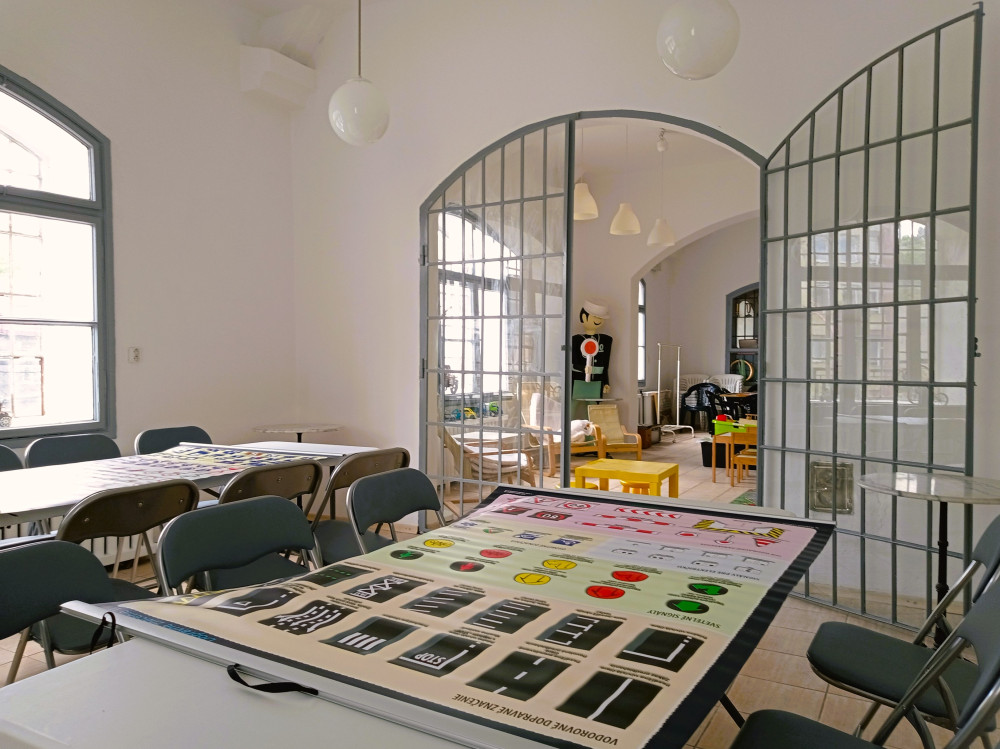
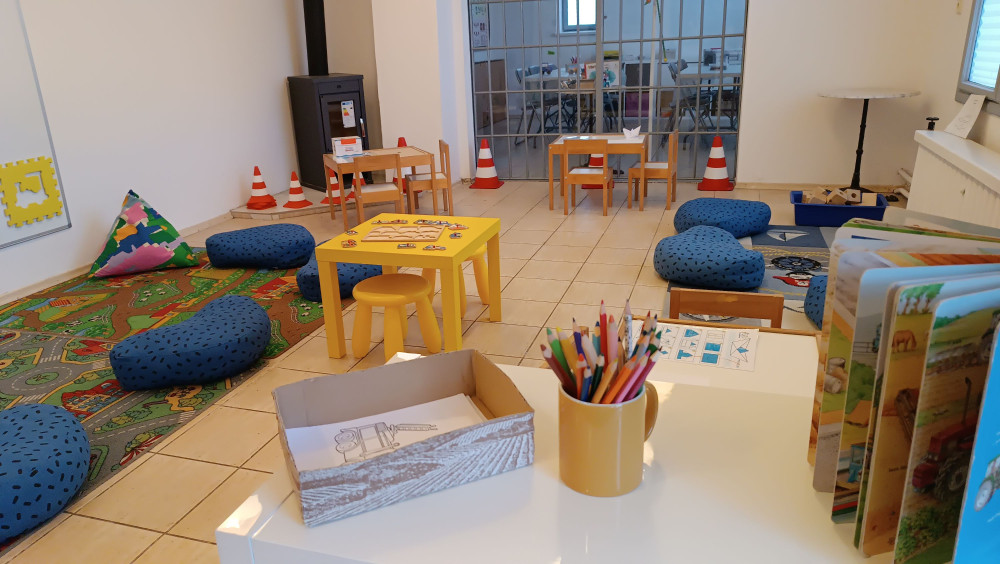
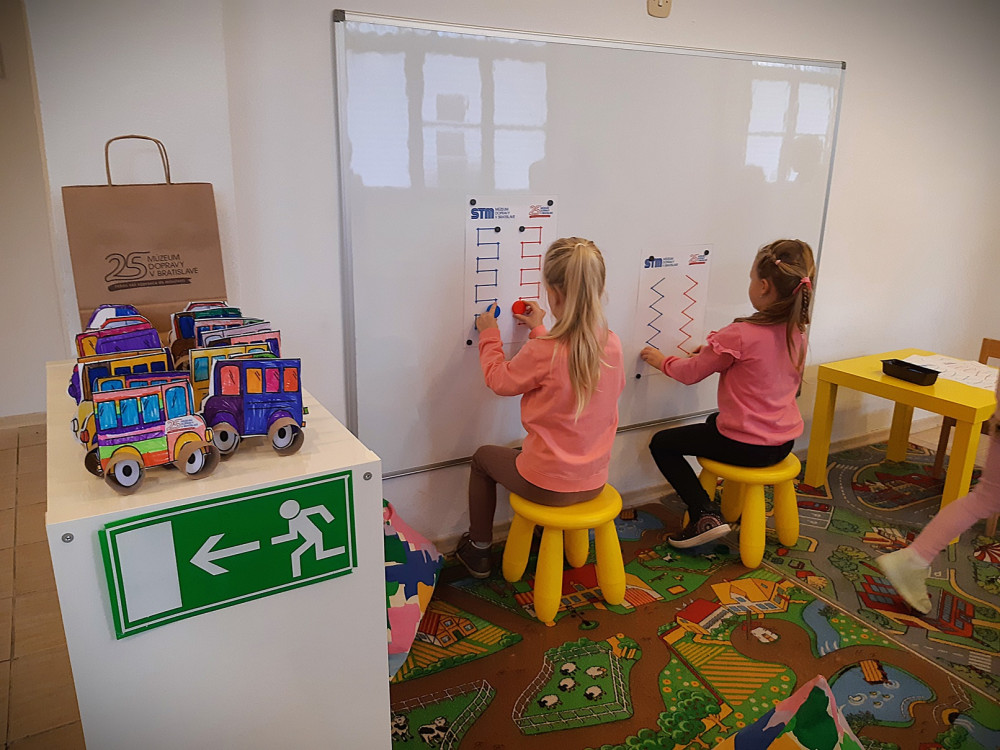
The STM-Museum of Transport in Bratislava has set up a space for its visitors suitable as a relaxing environment for families with children and for activities for the youngest children with toys focused on the field of transport, books and puzzles. The second part has a space for smaller school groups, a classroom for educational activities, and playful, creative workshops within specialized programs for schools.
The history of the tugboat ŠTUREC begins in 1937, when it was built in the old Škoda Works shipyard in Komárno as a motor tanker together with two other cargo ships, VAJANSKÝ and ŠTEFAN MOYSES. It was christened on September 11, 1937 with the name ŠTÚR. It was the first of three motor tankers to be launched on the Danube. The ships were built for the shipping company Československá dunajplavba, úč. spol. In the period 1938-1945, they were used to transport mineral oils on the route between the port of Giurgiu in Romania and the port of Bratislava. In addition to transporting liquid goods, they could also tow three to six tugboats.
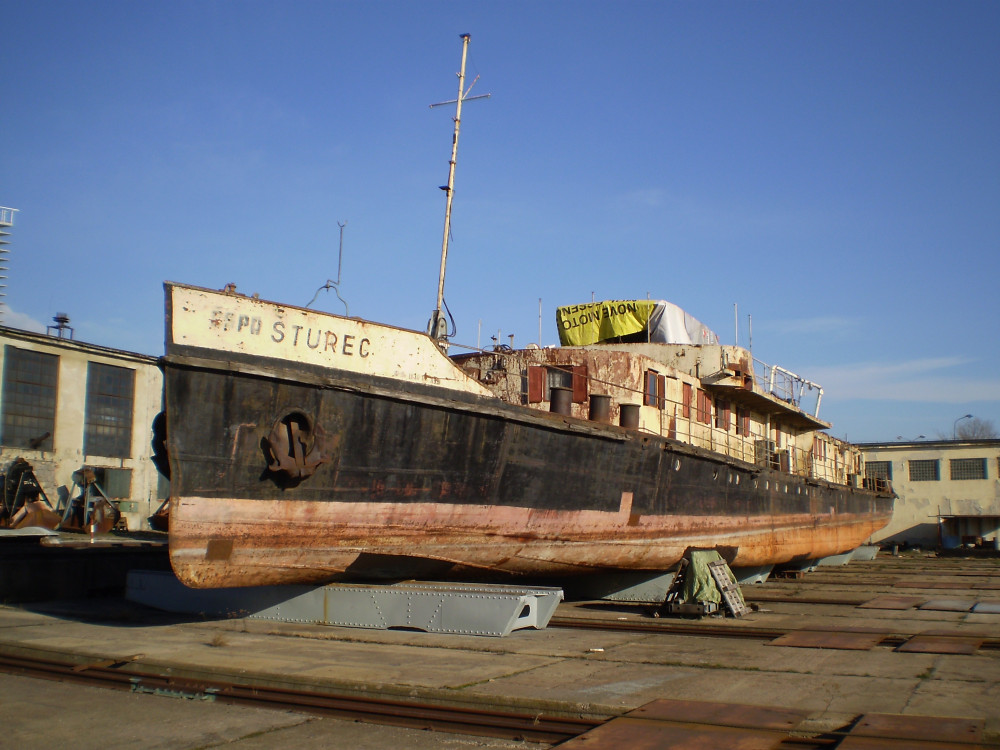
In 2012, it was declared a movable national cultural monument, at the twelfth hour, as the last of the historic ships not to end up in the scrapyard. The tugboat came under the management of the STM-Museum of Transport in Bratislava in 2013. The ship has been under reconstruction since 2015. The initiative to save this rare historic tugboat came from former Dunajplavba employees, Juraj Bohunský and Ing. Jiří Mandl, who also contributed to ensuring that this last tugboat, which was used for towing under the Czechoslovak flag, became part of the future museum of water transport.
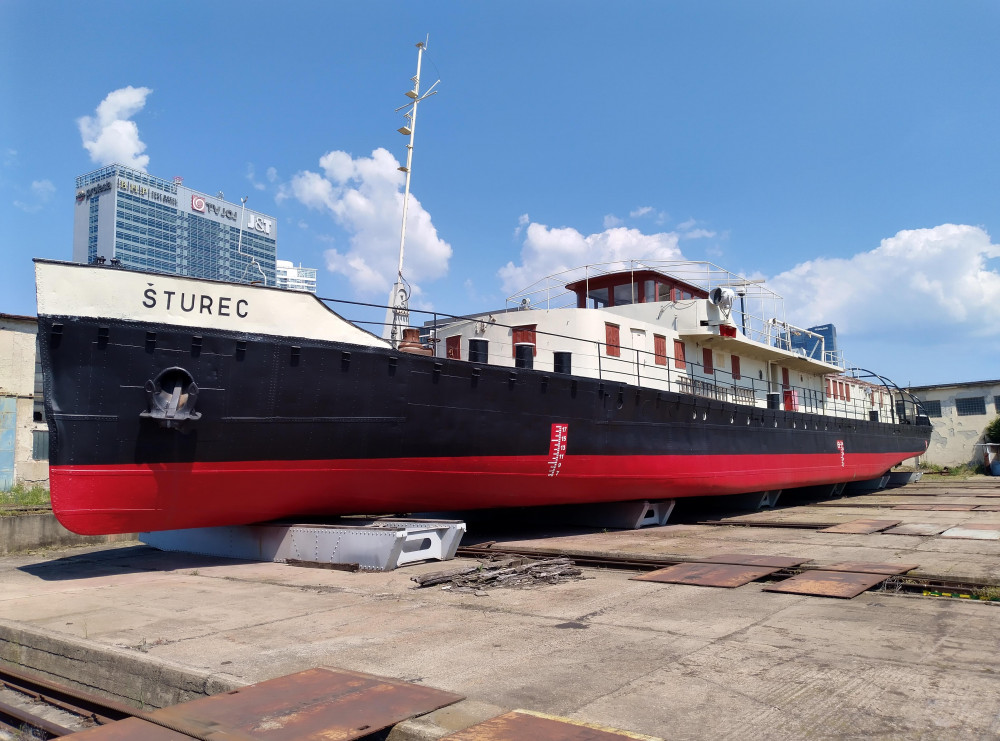
Technical information:
ŠTÚR
Max. length: 70.3 m
Max. width: 9 m
Draft: 0.74 m
ŠTUREC
Max. length: 56 m
Max. width: 9 m
Draft: 1.5 m