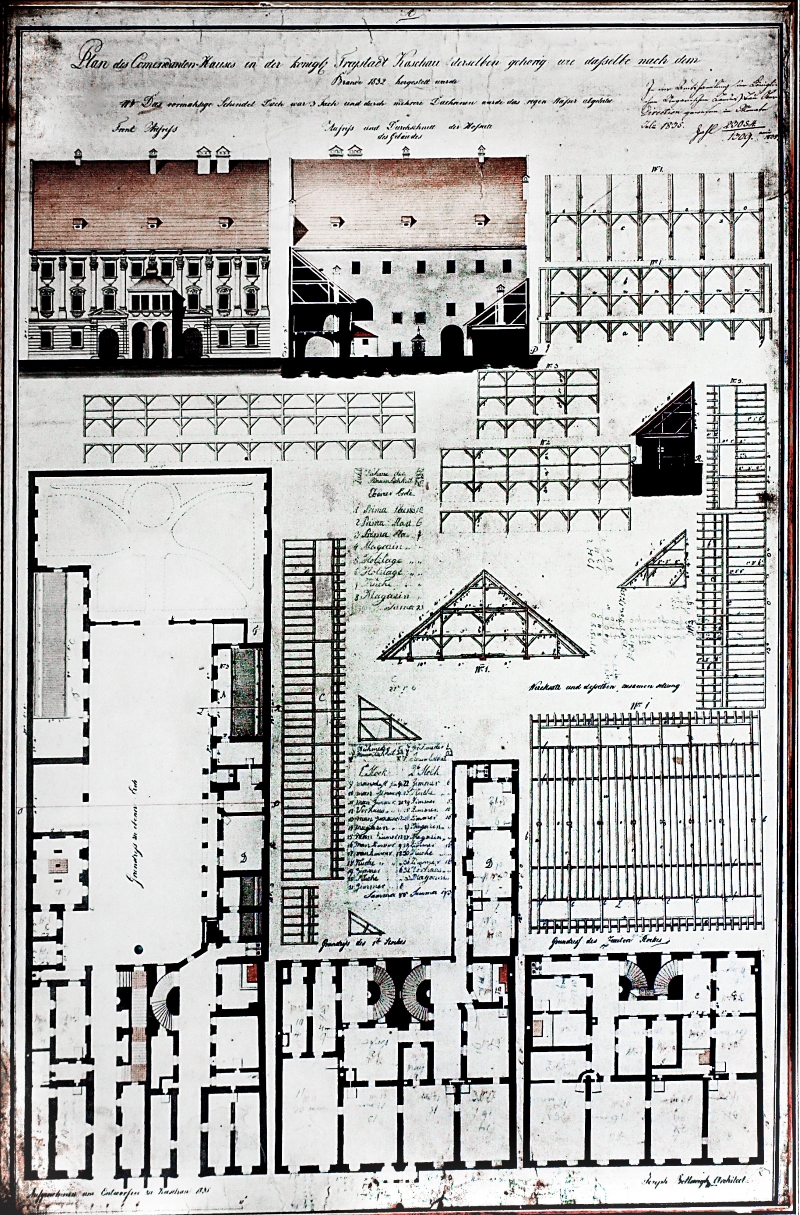
This building—featuring a blend of Classicist, Baroque, and Renaissance styles and currently managed by the Slovak Technical Museum—is an architectural landmark in the northern part of Košice’s city center. It stands on the site of four Gothic burgher houses dating back to the 13th century.
In the 16th century, one of these houses was the residence of Johannes Rueber von Fixendorf, who served as both the Captain of Upper Hungary and the commander of Košice. His home was used by prominent imperial commanders during the wars against the Ottoman Empire and the anti-Habsburg uprisings. One such figure was General János Bornemisza, a commander of Hungarian cavalry (notably present at the Battle of White Mountain in 1620). Later, Emperor Ferdinand III designated Bornemisza’s house as the official seat of the Captains of Upper Hungary; for centuries thereafter, the building served as the permanent residence of the region's highest-ranking military officials.
In the late 17th century, Captain František Wesselényi commissioned the structural unification of the complex in the Renaissance style. The interior reflects its origins as a cluster of burgher houses, featuring a traditional Gothic *mázhaus* (a large, vaulted entrance hall) and a red marble fireplace bearing a Latin inscription honoring János Bornemisza, who bequeathed the house to Wesselényi in 1652.
František Rákóczi II stayed here during his time in Košice, and the building has since been known as Rákóczi Palace. In the 18th century, it underwent a comprehensive reconstruction in the style of the Theresian classicizing Baroque and later served various functions—as a school, a library, and an administrative office. In 1945, it was allocated for the establishment of the Technical Museum in Košice.